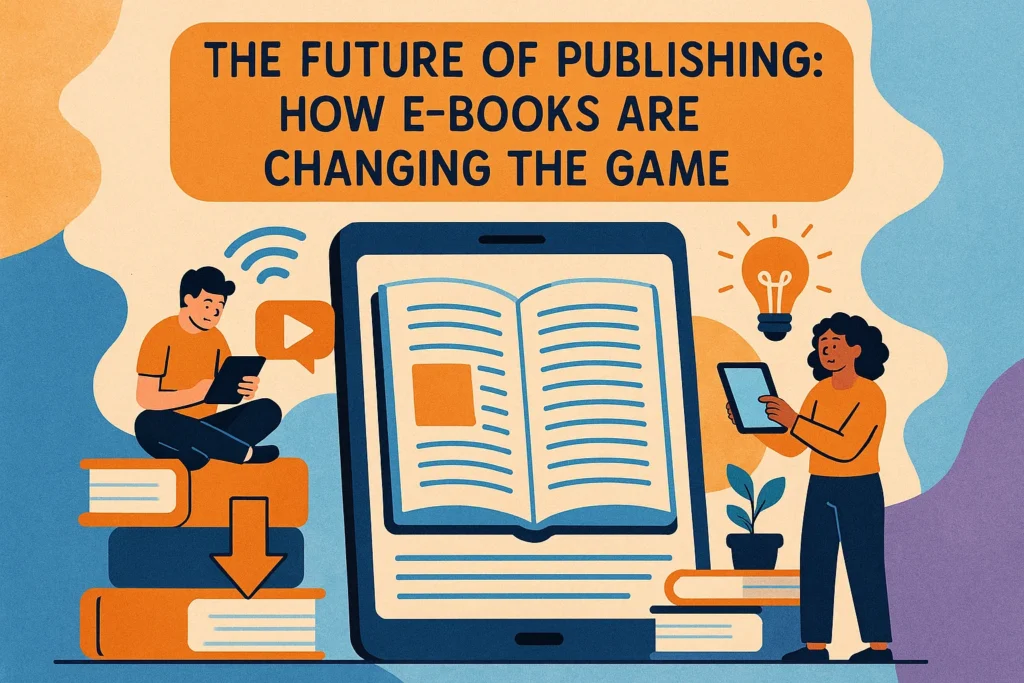
In recent years, the publishing industry has seen a dramatic shift with the rise of e-books. These digital books have revolutionized how we read, write, and consume literature, challenging traditional publishing models and opening up new opportunities for authors and readers alike. From convenience and accessibility to a new wave of self-publishing, e-books are reshaping the landscape of the literary world. In this blog, we’ll explore the current state and future potential of e-books in the publishing industry.
The Rise of E-Books: A Brief History
The concept of e-books isn’t new, but it gained significant momentum with the advent of e-readers like Amazon’s Kindle, introduced in 2007. This device allowed readers to store thousands of books in a lightweight format, making it more convenient than ever to access literature. Early e-books were often clunky and hard to navigate, but advancements in technology have led to more polished, user-friendly formats.
In the years following the Kindle’s launch, e-book sales surged. In fact, by 2011, e-book sales had surpassed hardcover sales in the United States, signaling a fundamental shift in how people accessed books. E-books provided a platform for independent authors to publish their work, eliminating the need for traditional publishers. This created a democratized space for writers of all backgrounds and experiences, opening doors to a broader variety of genres, voices, and storytelling techniques.
The Convenience and Accessibility of E-Books
One of the main reasons e-books have become so popular is their convenience and accessibility. With e-books, readers no longer need to leave their homes or wait for a physical book to be delivered. Instead, they can download books instantly onto their smartphones, tablets, or e-readers, which has made reading more accessible than ever.
E-books also offer readers the flexibility to carry entire libraries in their pocket. No longer do readers need to decide which book to bring on vacation or worry about luggage space. The portability of e-books has made them especially appealing to frequent travelers, commuters, and digital natives who are accustomed to consuming media on the go.
E-Books and the Changing Face of Publishing
The shift to digital has not only altered how readers access books but has also redefined the publishing process itself. For authors, e-books offer a quicker and more cost-effective way to publish their work. Traditional publishing can be a lengthy and challenging process, often involving agents, publishers, and lengthy approval cycles. In contrast, the digital age has paved the way for self-publishing platforms like Amazon Kindle Direct Publishing (KDP), Smashwords, and Draft2Digital, which empower authors to take control of their work and reach a global audience.
E-books have also made it possible for niche genres and independent authors to thrive. Authors who might have struggled to find a traditional publisher for their work can now publish independently and find success on their own terms. The rise of e-books has given readers a much wider variety of books to choose from, often leading them to explore books and genres they might not have otherwise considered.
Self-Publishing and the Author Entrepreneur
Self-publishing has been a game-changer for authors, turning them into entrepreneurs in charge of every aspect of their publishing process. With tools for editing, design, marketing, and distribution all available to authors, the barrier to entry has significantly lowered. Websites like 24 Seven Publishing offer authors the guidance and resources they need to succeed in the evolving landscape of digital publishing. Authors can now create polished, professional books without the need for a traditional publishing house.
For many, self-publishing through e-books is not just about getting their stories out there; it’s about reaching an audience. Online platforms like Amazon, Barnes & Noble, and Kobo have made it possible for authors to directly interact with readers, gather feedback, and build a loyal following. Writers are no longer dependent on traditional gatekeepers like editors or agents. Instead, they can control every aspect of the publishing process, from writing to pricing and even marketing.
The Global Reach of E-Books
One of the most exciting aspects of e-books is their ability to reach a global audience. Traditional publishing often had geographical constraints, with books being available in specific regions and countries. E-books, on the other hand, can be distributed worldwide with the click of a button. Platforms like Amazon KDP enable authors to sell their e-books in multiple languages and countries, breaking down barriers that once limited the reach of self-published authors.
This global accessibility has democratized reading. In regions where physical books are expensive or scarce, e-books provide an affordable and easily accessible alternative. For readers, this means greater exposure to international literature and diverse voices that may have previously been overlooked.
E-Books and the Environment
As the world becomes more environmentally conscious, e-books are seen as a more sustainable alternative to traditional printed books. Printing, shipping, and packaging books all have significant environmental costs. E-books, on the other hand, have a much smaller carbon footprint. Once a book is digitized, it can be downloaded and shared with millions of readers without the need for physical resources.
This environmental benefit is becoming increasingly important in today’s world, where sustainability is a growing concern. The rise of e-books aligns with broader efforts to reduce waste and energy consumption in the publishing industry.
The Future of E-Books: What’s Next?
As technology continues to advance, e-books are likely to evolve further. While the basic concept of an electronic book remains the same, there are several exciting innovations on the horizon:
- Enhanced E-Books with Interactive Features
One of the biggest trends in e-books is the introduction of interactive elements. Enhanced e-books, particularly in the education and children’s book markets, are incorporating videos, animations, quizzes, and hyperlinks to provide a richer reading experience. This move toward multimedia books is changing how readers engage with stories, blending the lines between reading and entertainment. - Audiobooks and E-Books Integration
The rise of audiobooks has also contributed to the evolution of e-books. Many readers now prefer to listen to books while on the go, and e-book platforms are increasingly integrating audio and text. Amazon’s Whispersync technology allows readers to switch between reading the e-book and listening to the audiobook without losing their place, offering a seamless reading experience. - Augmented Reality (AR) and Virtual Reality (VR)
Augmented reality and virtual reality are still in their early stages but hold incredible potential for the future of e-books. Imagine stepping inside a story, where readers could interact with characters or explore 3D environments. While this technology is not yet widespread, its integration into e-books could revolutionize how we experience literature in the years to come. - Artificial Intelligence and Personalized Reading
Another exciting development in the world of e-books is the integration of AI-powered recommendations and personalized reading experiences. As algorithms improve, e-book platforms will become more adept at suggesting books that match the reader’s preferences. AI can also be used to adapt the story based on reader choices, creating interactive experiences where readers have a direct hand in shaping the narrative. - The Growth of Subscription Models
Subscription-based services like Kindle Unlimited, Scribd, and Audible are gaining popularity among readers. These services offer unlimited access to thousands of books for a monthly fee, allowing readers to explore new authors and genres without making individual purchases. This model is likely to continue growing, giving readers more flexibility and accessibility to content.
Challenges for E-Books and the Publishing Industry
While e-books have introduced countless advantages, they also come with their own set of challenges:
- Piracy: The digital nature of e-books makes them susceptible to piracy. Unauthorized copies of e-books can be easily distributed, which is a significant concern for authors and publishers trying to protect their intellectual property.
- Saturation: The ease of self-publishing means that the market is saturated with books. While this democratization of publishing is a positive development, it also makes it harder for individual authors to stand out. Discoverability becomes a key issue, and authors must work harder to market their books effectively.
- Reader Preferences: While e-books have grown in popularity, some readers still prefer the tactile experience of printed books. The feel of the paper, the weight of the book, and the act of turning physical pages are irreplaceable for many. As a result, the future of e-books will likely be one of coexistence with print books rather than complete replacement.
Frequently Asked Questions (FAQ)
Q1: How have e-books changed the publishing industry?
E-books have made publishing more accessible, allowing authors to self-publish and distribute their work globally. They have also provided readers with greater convenience and instant access to books.
Q2: What are the advantages of e-books over traditional print books?
E-books are more portable, affordable, and accessible. They allow readers to carry multiple books in one device and instantly download titles. E-books are also more environmentally friendly, reducing the need for paper, printing, and shipping.
Q3: Are e-books the future of publishing?
While print books will likely continue to coexist with e-books, the future of publishing is undoubtedly digital. The convenience, affordability, and global reach of e-books make them an essential part of the publishing landscape.
Q4: How does e-book piracy affect authors?
E-book piracy is a significant concern for authors and publishers, as it leads to unauthorized distribution of books, potentially affecting sales. Authors must take steps to protect their work through digital rights management (DRM) and other security measures.
Q5: What is the role of self-publishing in the e-book market?
Self-publishing has been a game-changer for authors, allowing them to publish and distribute their e-books without the need for traditional publishers. This has democratized the publishing process and provided readers with a broader variety of books.
Conclusion
E-books have radically transformed the publishing landscape, offering new opportunities for authors and readers. The ability to self-publish, reach a global audience, and access books instantly has revolutionized how we interact with literature. As technology continues to evolve, the potential for e-books to integrate multimedia elements, AI, and personalized experiences is vast. However, challenges such as piracy and market saturation remain. Nonetheless, the future of publishing is undoubtedly digital, and e-books will continue to play a central role in the literary world.
Whether you’re an aspiring author looking to break into the publishing industry or a reader seeking a more convenient way to enjoy your favorite books, the rise of e-books is an exciting development that shows no signs of slowing down.